Author: lillyviva79@gmail.com

  • Trip Planning and the Future of Travel

    Trip Planning and the Future of Travel

    The Travel Planning Process

    Planning a trip can sometimes be challenging but is crucial to figuring out where to go without spending too much money.

    Step 1: Start with Flights

    Find the cheapest flight into the destination, or the region if you don’t have a set place in mind. Look at capitals and largest cities of more developed countries in the region. Consider regional airlines and discount carriers, but understand the full cost of your travel, including getting to and from the airport and baggage fees.

    Step 2: Plan the Routes

    Pick some major cities and/or sights in the region, and draw logical lines on the map. Check transportation routes and schedules, considering cost, travel times and connections. If you’re traveling to a less developed country, don’t look at travel distance—road quality can vary dramatically. Instead, refer to travel times and allow for unexpected delays.

    Step 3: Plan the Schedule

    Make a rough schedule on paper of approximate dates in each place and the method of transportation to get from town to town. Remember rule number one: stay flexible. Do not commit to anything, and do not make reservations anywhere, with the exception of a hotel for the first few nights after you arrive.

    Using AI for Trip Planning

    AI tools can quickly generate personalized travel plans, saving hours of manual research and coordination. From solo trips to family vacations, itinerary tools help streamline bookings, routes, and daily activities.

    Benefits of AI Trip Planners:

    BenefitDescription
    Fast and Flexible PlanningQuickly generate suggested itineraries based on your input
    Personalized SuggestionsGet ideas that match your travel style
    Efficient Research SupportSummarize travel blogs and compare destinations
    Helpful for BudgetingEstimate spending and suggest destinations that align with your budget
    Interactive PlanningRefine details like transport options and reservations through conversation

    Step-by-Step AI Planning:

    1. Start broad: Ask “Where can I travel in Europe for 7 days in September with mild weather?”
    2. Refine goals: Say “Plan a nature-focused 5-day itinerary in Costa Rica with light hiking and beach time.”
    3. Build daily itinerary: Ask “Create a 3-day itinerary for Tokyo with landmarks, food, and local markets.”
    4. Get suggestions: Ask “What’s the best way to get from Rome to Florence by train?” or “Which restaurants in Barcelona serve traditional Spanish cuisine?”
    5. Export or organize: Request the AI to format your itinerary into a bullet-point list or daily planner.

    Important Note: While AI can suggest ideas, confirm booking availability, open hours, and entry requirements with official sources before finalizing plans. AI tools do not connect to live booking systems and may lack local nuance or up-to-date information.

    The Future of Travel

    The list of “50 of the world’s best travel destinations in 2026” is not a geographical race, but a competition of ideas. In that world, a museum can become a journey, a road can become a memory, and a small space can become a global destination if it touches people’s emotions.

    Travel, after all, is no longer about how far you go, but how deep you go. Whether you are a solo adventurer, a family seeking new experiences, or a couple looking for romance, the world in 2026 offers more opportunities than ever to find experiences that resonate with your personal story. The key is to plan thoughtfully, travel responsibly, and embrace the unexpected—because those moments of surprise are often the ones that become the most cherished memories.

  • Health, Safety, and Responsible Travel

    Health, Safety, and Responsible Travel

    Health on the Journey

    Feeling well makes all the difference:

    • Hydrate before and during flights, and go easy on alcohol and caffeine
    • Move regularly on longer journeys to reduce stiffness and help circulation
    • Pack a small “flight comfort kit”: eye mask, earplugs, lip balm, moisturiser, socks
    • Keep essential medication in your hand luggage, never checked baggage
    • If you are prone to jet lag, plan gentle activities on arrival day and try to quickly align to local meal and sleep times

    Travel Insurance: A Non-Negotiable

    Protecting your investment is essential. Holidays are precious, both emotionally and financially:

    • Make sure you have appropriate travel insurance in place from the time you book, not just from the day you travel
    • Keep records of bookings and payments in one secure place
    • If travelling with expensive items like cameras, laptops or jewellery, check they are covered

    A good travel insurance package offers coverage on common claims such as medical expenses incurred overseas, trip cancellation, loss of or damage to personal property and baggage, as well as medical evacuation and repatriation.

    Responsible Travel

    Thoughtful choices can protect the places you love:

    • Learn a few simple words in the local language: hello, please, thank you, excuse me
    • Dress appropriately for cultural or religious sites
    • Support local restaurants, artisans and guides where possible
    • Follow guidance on wildlife encounters: avoid activities that involve direct contact, feeding, riding or performing animals
    • Reduce waste where you can: refillable water bottles, avoiding unnecessary plastics, reusing towels responsibly

    These small actions add up, and you will often find locals respond warmly to visitors who show respect and curiosity.

    Staying Flexible

    “The most challenging part of traveling for me was learning to stay flexible. Things will inevitably go wrong, but don’t let minor setbacks ruin your trip,” shares Michaela Castle, who studied abroad and visited 35 countries.

    A few tips for staying flexible:

    • Give yourself “buffer time”: consider arriving at the airport earlier than strictly needed
    • Allow time between connections, especially if changing terminals or airlines
    • On multi-centre trips, factor in “do nothing” days after long travel segments
    • Avoid scheduling something important immediately on your return day

    Checking Local Restrictions

    Before traveling, always be aware of local regulations and restrictions. These can range from entry requirements to measures to curb overtourism. For example, Japan recently imposed a tourist ban on all visitors to Kyoto’s historic Gion District to protect locals from overcrowding and inappropriate conduct by unruly tourists.

    Staying Informed About Attractions

    Making a list of things to see is a must. But sometimes, certain tourist attractions may undergo major changes like closures, different operating hours, or relocation. The famous Black Trunk Rock in Taiwan collapsed into the sea in December 2023, causing the formerly popular vista to disappear completely. Before you travel to a specific location, make sure to do a quick search online to see if the place is still open.

  • Practical Travel Tips for a Smooth Journey

    Practical Travel Tips for a Smooth Journey

    Pre-Trip Planning

    Travel should feel exciting, not overwhelming. With a bit of smart planning, you can spend less time stressing over logistics and more time soaking up the experiences that matter.

    Start With Your “Why” Before Choosing Your “Where”

    Before you even look at flights or hotels, get clear on what you want this trip to do for you:

    • Do you need total rest and recovery, or adventure and discovery?
    • Is this about family connection, a romantic escape, or solo reset time?
    • Is food, culture, wildlife, nightlife, shopping or nature your top priority?

    Once you know the “why,” it becomes much easier to pick the right destination, length of stay and style of accommodation.

    Be Strategic About When You Travel

    A little date flexibility can dramatically improve value and experience:

    • Avoid peak local holidays where possible: beaches and attractions can be crowded, and prices increase
    • Consider shoulder seasons: often you get pleasant weather, fewer crowds and better value
    • Check for big events in your destination: they might be a wonderful bonus or a reason to avoid those dates

    Choose the Right Accommodation

    A beautiful hotel is about more than a star rating:

    • Location: Do you want to be right in the heart of things, or in a quieter area?
    • Atmosphere: Boutique and characterful, or large resort with lots of facilities?
    • Layout: For families or friends, interconnecting rooms or villas can offer better value
    • On-site facilities: Spa, kids’ club, gym, water sports, restaurants, bars

    Smart Packing

    Overpacking is one of the most common travel mistakes. A few tricks:

    TipDescription
    Plan outfits by dayAvoid “just in case” items
    Stick to a colour palettePieces mix and match easily
    Use packing cubesKeep your suitcase organised
    Create a travel toiletry kitKeep minis ready-packed
    Carry essentials in hand luggageIn case of delays or lost luggage

    Organising Travel Documents

    A well-organised travel wallet (physical or digital) saves a lot of last-minute stress:

    • Passport and any necessary visas or entry documents
    • Copies of flight confirmations and accommodation details
    • Transfer or car-hire information
    • Travel insurance details and emergency numbers
    • Any medical letters, prescriptions or vaccination records

    Keep digital copies securely stored and easily accessible, and avoid packing all originals in one bag.

    Money Matters

    A sensible approach to money makes travel feel far more relaxed:

    • Carry a mix of payment options: a credit card, a debit card, and some local currency
    • Notify your bank of your travel dates if required, to avoid card blocks
    • Use hotel safes for passports and larger amounts of cash
    • Keep a separate small wallet for everyday use

    Technology and Connectivity

    Seasoned traveler Ombeline Daragon, who has been “living out of a backpack” for five years across 32 countries, offers these tech tips:

    • Download offline Google Maps for your destination before you board your flight. “Never rely solely on airport Wi-Fi,” she advises.
    • Get a one-day e-sim for your first day in an unfamiliar country for immediate access to maps, translation apps, and ride-hailing services.
    • Pre-book a taxi once you’ve arrived at the airport. “It’s safer, the price is fixed, and you avoid the ‘tourist tax’ right out of the gate,” Daragon explains.
    • Always click ‘no’ on accepting the conversion when withdrawing money from an ATM. “Let your own bank handle the conversion, you’ll get a much better rate,” she adds.
    • Buy physical sim cards from a store in the city for better plan options and lower prices than “tourist specials” at the terminal.
  • South Africa – A Premier Destination

    South Africa – A Premier Destination

    Why South Africa Should Be on Your Travel List

    South Africa is the kind of country that makes “what do you want to do?” feel like a much bigger question than expected. Safari? Absolutely. Cape Town? Obviously. Wine tasting, whale watching, penguins, mountain roads, private reserves, and a few days doing very little at all? Also yes.

    Nowhere else gives you this much in one place. South Africa combines the iconic wildlife experiences that draw guests to Africa with sophisticated cities, incredible food and wine, dramatic coastlines, and a cultural richness that stays with you long after you’ve left. It’s a destination that refuses to make you choose between untamed wilderness and modern luxury.

    For international travellers, it is also far more accessible than many people expect. Well-connected airports, good road infrastructure, and English spoken throughout the country make travelling easy, while the favourable exchange rate means luxury experiences offer exceptional value.

    Key Regions to Explore

    Cape Town

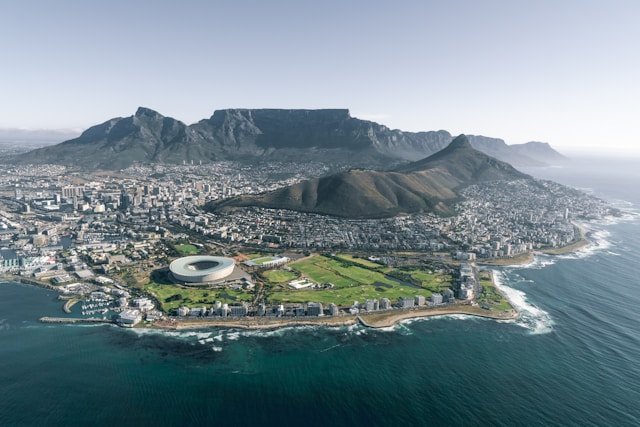
    Cape Town (affectionately known as the Mother City) makes an unforgettable first impression. Table Mountain rises above the city on one side, while the Atlantic Ocean stretches endlessly on the other. Between them lies a destination where award-winning restaurants, vibrant neighbourhoods, rich history, and spectacular coastal scenery come together with remarkable ease.

    Ride the cableway to the summit of Table Mountain, see the African penguins waddling about at Boulders Beach, and follow the winding roads of the Cape Peninsula. Most guests spend three or four nights here.

    Kruger National Park and Private Reserves

    This is where safari dreams become reality. Kruger National Park is one of Africa’s largest and most celebrated protected areas, spanning nearly 20,000 square kilometres and offering wondrous wildlife viewing year-round.

    Along its western boundary lies a collection of world-renowned private reserves, including the Sabi Sand, Timbavati, Thornybush, and Klaserie. Together, they form part of the Greater Kruger ecosystem. Luxury lodges pair warm hospitality with expert guides and trackers, all-inclusive stays, and twice-daily game drives in open safari vehicles.

    The Cape Winelands

    Just an hour from Cape Town, the valleys of Stellenbosch, Franschhoek, and Paarl unfold beneath vineyard-covered slopes and dramatic mountain peaks. Historic Cape Dutch estates sit among rows of vines, while oak-lined avenues lead to some of the country’s most celebrated wineries and restaurants.

    Franschhoek, in particular, has earned its reputation as South Africa’s culinary capital, home to award-winning chefs, fairytale wine estates, and some of the country’s finest dining experiences. Spend two or three nights here.

    The Whale Coast and The Garden Route

    The Whale Coast, just a couple of hours from Cape Town, is home to Hermanus, widely regarded as one of the world’s finest places for land-based whale watching. Between July and November, southern right whales arrive to calve in the sheltered bays, often surfacing just metres from the shoreline.

    Continue east, and the landscape shifts into the Garden Route, where ancient indigenous forests, dramatic cliffs, peaceful lagoons, and long, empty beaches are connected by charming towns such as Knysna, Wilderness, and Plettenberg Bay.

    Best Time to Visit South Africa

    SeasonMonthsHighlights
    Prime Safari SeasonMay to SeptemberBush thins out, animals congregate at waterholes; days warm, mornings cold
    SummerOctober to AprilCape Town and Winelands come alive; long warm days, alfresco dining
    Whale SeasonJuly to NovemberSouthern right whales arrive; watch from clifftops above Hermanus
    Shoulder Season (Recommended)April, May, SeptemberExcellent safari conditions, lovely weather in Cape, fewer crowds
  • Top Global Destinations for 2026

    Top Global Destinations for 2026

    Lonely Planet’s Best in Travel 2026

    Lonely Planet has unveiled its “Best in Travel 2026” edition, offering 50 exciting reasons to explore the world in the coming year. For the first time, the publication presents 25 recommended experiences alongside 25 trending destinations.

    Trending Destinations for 2026

    RegionDestinations
    AfricaBotswana, Tunisia
    AmericasPeru, Theodore Roosevelt National Park (USA), Maine (USA), Mexico City, British Columbia (Canada), São Paulo (Brazil), Cartagena (Colombia), Barbados
    EuropeCádiz (Spain), Sardinia (Italy), County Tipperary (Ireland), Utrecht (Netherlands), Finland, Réunion Island (France)
    OceaniaIkara-Flinders Ranges and Outback (Australia), North Island (New Zealand), Solomon Islands
    AsiaJeju Island (South Korea), Quy Nhon (Vietnam), Siem Reap (Cambodia), Phuket (Thailand), Jaffna (Sri Lanka)

    Natural Wonders and Outdoor Adventures

    For travelers eager to connect with nature, Botswana offers the world’s largest inland delta—the Okavango Delta. This beautiful, never-drying wetland with waterways and lush vegetation allows travelers to explore by mokoro (dugout canoe) and observe elephants, hippos, and abundant wildlife up close, experiencing a true “African Eden”.

    The Ikara-Flinders Ranges in South Australia features Australia’s oldest mountain ranges, where red deserts meet rugged gorges. It is ideal for 4WD adventures, canyon hiking, and stargazing camping, with rich Indigenous culture adding depth to the journey.

    Réunion Island in the Indian Ocean is a “paradise for outdoor sports enthusiasts.” You can hike across the active Piton de la Fournaise volcano and explore the UNESCO World Heritage-listed volcanoes, cirques, and waterfalls.

    Civilizations and Historical Immersion

    Peru remains the “ultimate South American experience.” Visit Machu Picchu, the “City in the Sky,” one of the Seven Wonders of the World, and explore the Inca architectural essence in Cusco’s old city.

    Siem Reap, Cambodia, is home to the UNESCO World Heritage site Angkor Wat. Gaze upon the famous “Khmer Smile” at Bayon Temple and marvel at the tree-embraced Ta Prohm Temple. The dry season offers the most majestic views of the ruins.

    Cádiz, Spain, one of Spain’s oldest cities, is surrounded by the sea on three sides. The elegant golden-domed cathedral and the towering Tavira Tower lookout are must-sees, but wandering the colorful narrow alleys of the old town is the best way to explore.

    Top Experiences for 2026

    Lonely Planet’s selection of travel experiences highlights the diversity of what the world has to offer:

    • Rafting in the Grand Canyon
    • A culinary tour through old Dubai
    • Attending a Premier League match in England
    • Street art exploration in Bristol
    • Whale watching in the Azores
    • Hiking through Tajikistan
    • Stargazing under the dark skies of New Zealand’s Wairarapa
    • Exploring Belgrade’s vibrant nightlife
    • Joining the colorful celebrations of Spicemas Carnival in Grenada
    • Sleeping in a train car in Kruger National Park, South Africa
  • The Ultimate Guide to Travel in 2026: Trends, Destinations, and Practical Tips

    The Ultimate Guide to Travel in 2026: Trends, Destinations, and Practical Tips

    A New Era of Exploration

    Travel has undergone a remarkable transformation in recent years. What was once about simply “seeing the sights” has evolved into something far more meaningful: a quest for immersive experiences, authentic connections, and personal transformation. As we navigate through 2026, the travel industry is experiencing a fundamental shift in how people plan, experience, and remember their journeys.

    The modern traveler is no longer content with being a passive observer. According to TIME magazine’s list of the “50 Greatest Travel Destinations in 2026,” tourism is moving away from a “sightseeing” model towards an “immersive experience” paradigm. Destinations are no longer just “places to see,” but “spaces to live in”. This shift reflects a deeper human desire to connect with places, cultures, and stories on a more profound level.

    Modern tourism is shifting from “travel to see” to “travel to feel” and, more profoundly, to “travel to become part of the story”. This means that the value of a destination no longer lies solely in whether it is “new or old,” but in its ability to evoke emotions and create lasting memories.

    Key Travel Trends Shaping 2026

    The Rise of Immersive Experiences

    Travelers in 2026 are seeking experiences that allow them to truly live in a place rather than just visit it. The Grand Egyptian Museum in Cairo, which houses 15,000 artifacts, has been described as a “storytelling machine” about ancient civilization. Similarly, the ReefLine underwater sculpture park in Miami Beach blends art, ecology, and renewable technology, transforming the ocean into a living museum.

    The Emergence of “Living Heritage”

    Heritage spaces are no longer static remnants of the past. Places like the Murujuga cultural landscape in Australia, with its 50,000-year-old rock carvings, are recognized not just for archaeological value but for their ability to recount human history through layers of indigenous memory. Ise-Jingu in Japan, a temple periodically rebuilt for thousands of years, demonstrates a different philosophy: heritage is something that is “intentionally reborn” rather than “remains unchanged”.

    Personalized and “Small but Profound” Spaces

    This year’s top destinations aren’t dominated by familiar “mega-destinations.” Instead, they feature smaller, highly personalized spaces: secluded accommodations like Maana Living in Kyoto, authentic culinary experiences like Ephedra in Chile, and scenic routes like El Camino de Costa Rica. This is a clear indication that travelers are no longer looking for “famous destinations,” but rather for “experiences that suit them personally.”